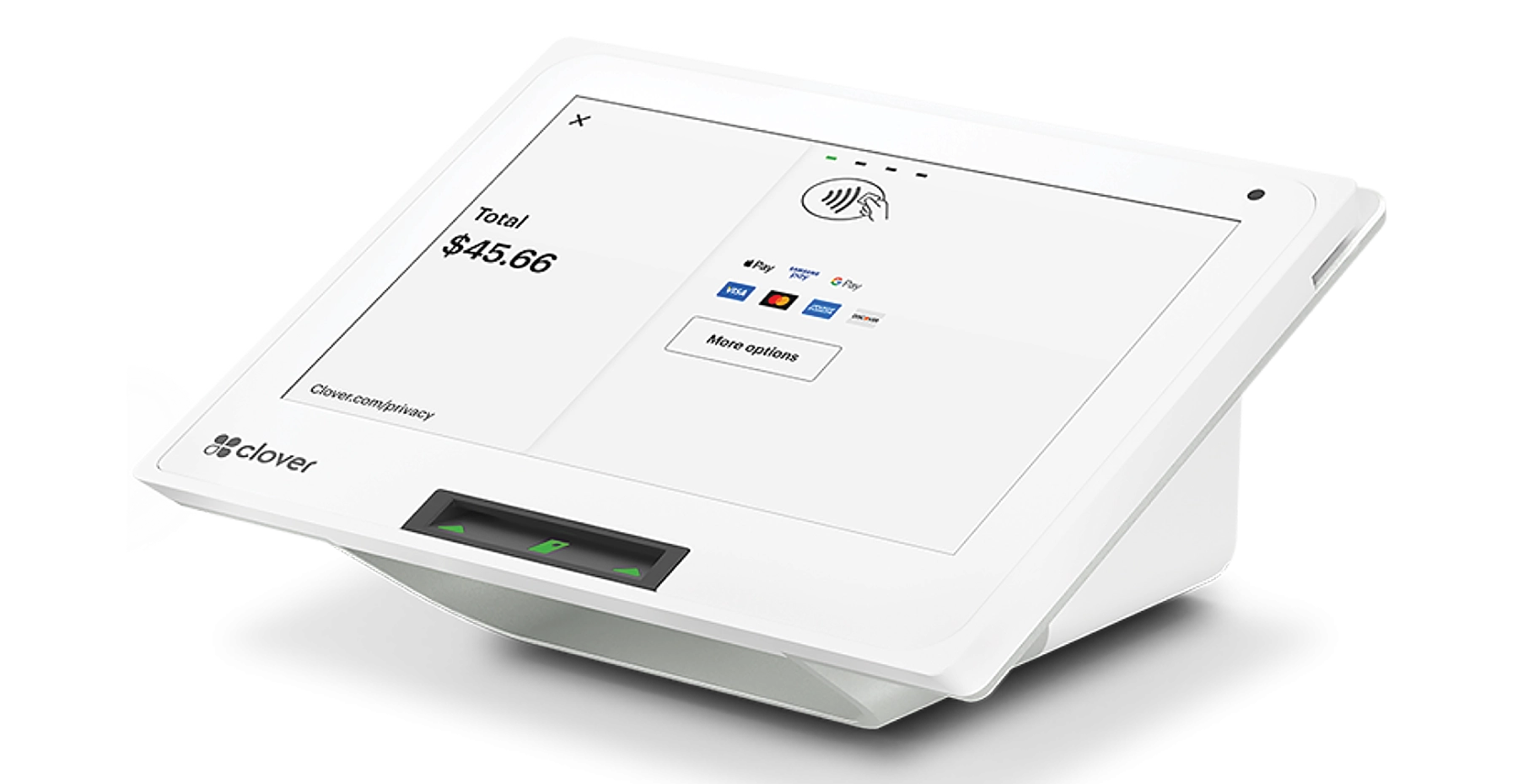


Big tech moves usually make headlines in investor circles—but this one’s different. When Fiserv, one of the world’s largest fintech companies, doubles down on Clover POS and sets a $3.5 billion revenue goal for 2025, it’s not just Wall Street who should care. If you’re a small business owner, this investment is directly aimed at you. Clover is an all-in-one clover pos system that combines hardware and software to help small businesses manage sales, payments, and operations.
Here’s what’s going on, why it matters, and what your next move should be if you want to grow, stay competitive, and future-proof your business. In this review, we’ll look at how Clover’s pos software and its hardware and software ecosystem are evolving to meet business needs in 2025 and 2026.
Who Owns Clover?
Clover is owned by Fiserv, the Fortune 500 financial technology company. Fiserv acquired Clover as part of its 2019 merger with First Data, the payments processor that originally launched Clover in 2012. So when people ask who owns Clover POS, the short answer is Fiserv — and Clover is now one of the largest point-of-sale platforms in the world, processing well over a hundred billion dollars in annualized volume.
That ownership matters more than trivia, for one practical reason: who you buy your Clover from determines what you pay to process.
Buy Clover hardware directly from Fiserv or a big-box channel, and the device is typically locked to Fiserv’s own processing at their published rates.
Buy the same hardware through an authorized reseller like VMS, and you get identical Clover devices and software, but the merchant account and processing rates are negotiated separately — which is usually where the real money is.
Same device, same Clover dashboard, same app market. Different cost per transaction, month after month. That is the part most owners find out about after they have already signed.
Why the Clover POS System Is Suddenly in the Spotlight Again
Clover POS has been a staple in the small business world for a while now, but in 2025, it’s going big league. According to Fiserv’s Q1 2025 earnings report, Clover revenue jumped 27% year-over-year. Its total gross payment volume (GPV) is nearing $300 billion annually. With this growth, Clover is positioning itself among the best POS systems and most robust POS platforms for small businesses, offering advanced features and scalability—even when you compare Clover and Square POS options for different growth stages.
Even more impressive? Fiserv’s CFO confirmed their goal to hit $3.5 billion in Clover-specific revenue this year. That means real money is being poured into software improvements, new features, more hardware options, and even global expansion.
Translation? They’re not just polishing Clover—they’re transforming it into a complete ecosystem for running and growing your business. This article provides a comprehensive Clover POS review for 2025/2026, evaluating its features, advantages, and suitability for various business types.
What “Quality Volume” Means—and Why You’re Exactly Who Fiserv Wants
Fiserv is making a strategic shift. Instead of focusing on small-time side hustles or micro-merchants who process a few hundred dollars a month, they’re investing in businesses that are serious about growth.
In their own words, they’re chasing “quality volume.”
That’s you.
Brick-and-mortar retail shops, restaurants, service providers, auto repair shops, salons, retail businesses, retail stores, service businesses, and service based businesses—anyone with consistent sales, customer flow, and a need for reliable payment tools is now Clover’s ideal customer.
Clover’s POS system offers specialized features for service-based businesses, such as appointment scheduling and client management tools.
The big takeaway? You’re going to get better tech, better support, and more features that are actually built with your day-to-day operations in mind.
Clover Is Doubling Down on Inventory Management Features That Help You Sell More
This is where it gets exciting. With Fiserv prioritizing real business owners, Clover is expanding the kinds of tools it offers. This isn’t just about taking payments anymore.
Clover’s software now includes robust inventory management and inventory tracking tools, allowing businesses to track stock levels in real-time across multiple sales channels, including in-store, online sales, and online stores. The system also features a kitchen display system (KDS) that organizes orders for restaurant staff, enhancing order management efficiency. Menu management is streamlined, as Clover allows restaurants to manage both in-person and online menus that adapt in real-time to stock levels. For payments, Clover’s POS system supports various payment methods, including credit cards, mobile wallets, and cash, making it versatile for different business types.
Some of the most impactful updates include customer engagement tools such as loyalty programs that automate rewards, advanced analytics for detailed sales and customer insights, and employee management features like time tracking and employee scheduling—beneficial for service-oriented businesses. Clover’s invoicing features allow service-based businesses to automate billing and track payments efficiently from a central dashboard. The app marketplace offers over 200 integrations, so you can customize your POS system with add-ons to fit your needs. Add ons and software plans can further expand Clover’s capabilities, but may come with additional costs.
Real-time sales data, dashboards, and advanced analytics help drive operational efficiency, letting you make decisions based on facts, not guesswork. Customer engagement and multi-channel sales channel management are now core strengths of Clover’s software, supporting online ordering, online payments, and seamless integration across all business operations.
And yes—Cash Discount integration is built-in, so you can legally offset card processing fees without upsetting your customers.
Whether you’re running a smoothie shop or a boutique, Clover’s software stack now works like a full-time business coach in the background.
From Local to Global (But Still Built for Main Street)
Clover is now live in 13 countries. That might sound like a “big biz” move, but it’s actually great news for small business owners.
Why? Because global expansion = platform stability. Clover is now recognized as one of the most robust POS platforms, offering a wide range of Clover hardware options. That means more developer support, more third-party integrations, and better app development for all merchants—not just enterprise giants.
Clover hardware includes the Clover Flex, Clover Mini, Station Duo, and Clover Kiosk, with new Clover devices for 2026 expanding hardware and software combinations designed for various operational needs. Plus, Clover isn’t losing sight of its core market. Everything about the product roadmap is still laser-focused on helping small and mid-sized businesses operate smarter and leaner. Even as new features and hardware are introduced, Clover remains a reliable choice for businesses.
Payment Processing and Pricing: What Small Businesses Need to Know
When it comes to choosing a point of sale POS system, payment processing and pricing are at the top of every small business owner’s checklist. Clover POS stands out by offering flexible payment processing options designed to keep your business running smoothly—whether you’re accepting chip cards, contactless payments like Apple Pay, or keyed-in transactions for phone orders.
Clover POS makes it easy for small businesses to accept card payments in-store, online, or on the go. With built-in support for credit, debit, and digital wallets, you can serve customers however they want to pay. Plus, features like offline mode ensure you never miss a sale, even if your internet connection drops.
When it comes to pricing, Clover offers transparent plans tailored to different business types and sizes. You’ll find options with flat-rate processing fees, as well as interchange plus pricing for those who want more control over costs. Monthly fees vary depending on your chosen software plan and hardware, but there are no hidden surprises—what you see is what you get. Hardware costs are upfront, and you can choose from a range of Clover devices to fit your needs, from handheld terminals to full countertop stations.
Unlike some other POS systems, Clover’s pricing structure is straightforward, so you can budget confidently. And with no long-term equipment leases required, you’re not locked into a system that doesn’t grow with your business. For small business owners, that means more predictability and less stress when it comes to managing payment processing fees and overall POS system costs.
Bottom line: Clover POS gives you the flexibility, transparency, and reliability you need to keep your business moving forward—without the headaches or hidden fees that can come with other point of sale solutions.
Is Your Current POS Payment Processing Keeping Up? (Spoiler: Probably Not)
Still using an FD150 or a basic terminal? Let’s be real—it’s time to evolve.
Old-school terminals can process transactions, sure. But outdated POS hardware is limited in functionality and lacks the flexibility, mobility, and user-friendly features of modern solutions. They can’t help you upsell at checkout, track your top-selling products, or automate discounts during slow hours. They don’t offer QR code ordering, curbside pickup, or smart email receipt integrations.
Clover does all of that. Clover offers a variety of POS hardware styles and credit card machines, including handheld devices like portable card scanners and countertop stations, giving you flexible options for different business needs and access to top POS devices for small businesses in 2025. And with Fiserv pumping more resources into development, the gap between Clover and everything else is only getting wider.
The VMS Perspective: Why We’re All-In on Clover
At Velocity Merchant Services, we’ve helped thousands of small business owners upgrade to Clover. And we’re not surprised to see Fiserv throwing fuel on the fire.
We believe in solutions that make your life easier, save you money, and scale with your goals.
We’re currently offering $2,000 toward any Clover device when you enroll in the Cash Discount Program. It’s our way of helping serious small businesses upgrade without the sting of upfront cost.
Our devices arrive pre-programmed, fully set up, and ready to use right out of the box. No stress. No nonsense.
Your Next Move: Grow, Upgrade, or Get Left Behind
The payment world is changing fast. If you’re using outdated tech, you’re not just missing out on cool features—you’re potentially losing sales.
So here’s what to do:
First, audit your current POS. What can’t it do that would save you time or grow your bottom line? Then, talk to a VMS rep—VMS is known for exceptional customer service and operates as an independent sales organization to support your transition to Clover. We’ll walk you through how Clover fits your business. And finally, don’t miss out on that $2,000 upgrade credit.
Not sure how these changes affect your business?
VMS keeps merchants ahead of card network rules, fee changes, and compliance deadlines — with a specialist who explains what actually matters for your store.
Or call our team: 888-902-6227
Final Take: When the Giants Bet on Small Businesses, You Should Too
When evaluating a Clover POS system, business owners should carefully consider Clover POS pricing, transaction fees, own monthly fees, per month costs, how pricing varies by industry, and potential additional fees. Clover POS often requires a 36-month, non-cancelable contract, and cancelling early may result in early termination fees. Clover’s proprietary hardware must be purchased upfront, often costing $1,000 or more, with hardware costs ranging from $349 to $1,899. An active software subscription is required for the system to function, with monthly fees starting at $29.95 and going up to $89.95 per month; without it, the hardware cannot operate as a POS. Transaction fees typically fall in the mid-2% range plus a small per-transaction fee, with higher rates for online or keyed-in transactions. Many costs are misunderstood, including add-on apps, equipment leases, and PCI fees, making the pricing structure complex. Compared to Square POS, Clover’s in-person processing rates are slightly lower, but Square offers a free plan and simpler pricing. Clover’s hardware options are more extensive than many competitors, and its all-in-one model is popular among U.S. retailers and service-based businesses. The app marketplace allows for wide integrations but can lead to additional costs, and monthly software fees can add up, especially with extra devices. Clover’s offline mode and employee management tools are more comprehensive than many competitors. This Clover review highlights both the strengths and potential drawbacks of the system, and Clover remains a leading choice for many businesses.
Fiserv doesn’t throw billions around lightly. Their faith in Clover means they believe in the power of small businesses to grow, evolve, and lead the way in digital transformation.
If you’re still clinging to a basic terminal or struggling with clunky systems, now’s the time to act. Clover isn’t just a tool—it’s your new growth partner.
Get ahead. Stay ahead. And let VMS help you every step of the way.
Have questions about these changes?
Fill out the form below and a VMS payment specialist will contact you shortly.